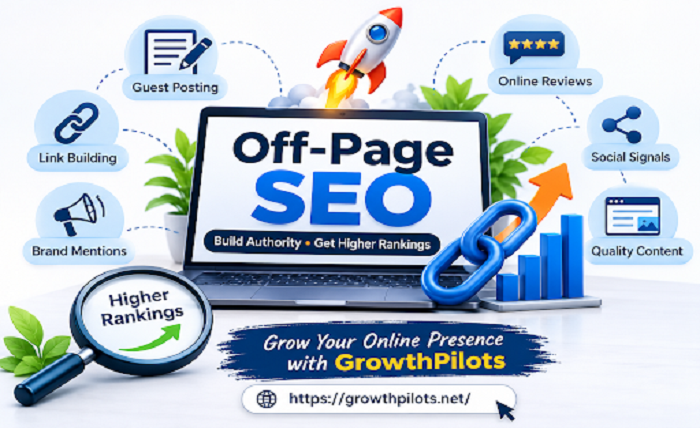
In today’s competitive digital landscape, having a well-designed website and publishing quality content are not always enough to achieve strong search engine visibility. Businesses also need to build credibility, establish authority, and develop a recognizable online presence. This is where off-page SEO becomes an important part of a well-rounded digital marketing strategy.
Off-page SEO includes activities carried out beyond your own website to strengthen its reputation, authority, and visibility. Link building, brand mentions, digital PR, and content promotion are among the activities that can support these goals.
Understanding the Importance of Off-Page SEO
Search engines consider many signals when evaluating websites, including content quality, technical performance, relevance, and reputation. Off-page SEO helps demonstrate that other websites and online sources recognize your content as useful and worth referencing.
When relevant, reputable websites link to your pages, those links can help people discover your content and provide search engines with additional context about your website. However, successful off-page SEO is not simply about collecting as many backlinks as possible. Relevance, editorial quality, and natural placement matter too.
1. Quality Backlinks Help Build Website Authority
Backlinks are links from other websites to your pages. A relevant link from a trustworthy publication can be more valuable than many links from unrelated or low-quality sources.
Businesses can pursue editorial mentions, useful guest contributions, and contextual links within genuinely relevant content. The goal should be to earn references that make sense for readers, rather than placing links wherever possible.
A thoughtful, quality-focused approach can support discoverability and contribute to a stronger overall SEO strategy.
2. Useful Content Creates Link Opportunities
High-quality content gives publishers, bloggers, and industry professionals a reason to reference your website. Practical guides, original research, expert commentary, and clear explanations can attract attention because they help readers solve real problems.
Before creating content, consider what your audience wants to learn. Answer common questions, explain complex topics in accessible language, and support important claims with reliable information. Content that offers genuine value is more likely to earn natural references over time.
3. Brand Mentions Expand Your Online Presence
Off-page SEO extends beyond traditional backlinks. Brand mentions, online reviews, industry discussions, and digital PR can help people become familiar with a business.
Consistent participation in relevant industry conversations can introduce a company to new audiences and strengthen its reputation. Businesses should focus on helpful communication and authentic relationships instead of pursuing mentions without considering context or audience fit.
4. Relevance Matters More Than Backlink Quantity
A common link-building mistake is measuring success only by the number of backlinks. A large volume of links does not automatically mean a strong backlink profile.
For example, a technology company may gain more relevant exposure from an editorial link on a respected technology website than from numerous links on unrelated sites. When assessing a potential placement, consider:
• Topical relevance and audience fit.
• The website’s content quality and editorial standards.
• Whether the page attracts a real, relevant readership.
• The context in which the link will appear.
• Whether the anchor text reads naturally.
These checks help businesses prioritize useful placements and avoid links that offer little value to readers.
5. Consistency Supports Long-Term SEO Growth
SEO is an ongoing process, not a one-time task. Businesses should review their backlink profiles, monitor organic search performance, refresh useful content, and look for relevant opportunities to contribute to their industry.
A balanced strategy combines technical SEO, on-page optimization, helpful content, and responsible off-page activities. Companies looking to strengthen their online visibility can learn more about digital marketing and SEO services at https://growthpilots.net/.
Final Thoughts
Off-page SEO can play an important role in building a website’s reputation, improving discoverability, and supporting long-term organic growth. By focusing on relevant backlinks, useful content, authentic brand visibility, and consistent improvement, businesses can create a stronger foundation for their digital marketing efforts.
Rather than chasing quick wins or backlink volume, prioritize quality, relevance, and genuine value for readers. A sustainable approach is more likely to support a healthy online presence over time.